Simplifying Discovery in a Complex Application Ecosystem
Introduction
I recently got the opportunity to work across multiple teams on the creation of a Content Management and Digital Experience System. One aspect of this project was to expand the CMS into a more extensible platform; we introduced an internal application marketplace that allowed users to enhance their product through these application integrations. I led the UX design of the application lifecycle experience, translating complex backend integration logic into an intuitive, scalable system for discovery, configuration, testing, and ongoing management.
The Problem
The CMS was evolving to support application integrations, but there was no clear user-facing structure for how those integrations should be declared, validated, or managed.
Users lacked clarity around:
When an application was installed vs configured
Whether it was ready for use
How it impacted their site
How to safely test or remove it
The technical system had defined states and dependencies, but these were not meaningfully represented in the interface. Without a clear mental model, users risked configuration errors and hesitation in adopting new integrations.
The challenge was to design a user experience that made complex system behavior understandable, safe, and scalable.
Constraints
Complex and evolving backend requirements
Multiple stakeholder groups with differing priorities
External engineering teams requiring precise design documentation
No established UX pattern within the CMS for extensibility
The solution needed to balance technical feasibility, clarity, and long-term platform scalability
My Role
I led the UX design for the application marketplace and integration management experience.
Mapped the end-to-end application lifecycle model
Synthesized technical requirements into user flows and interaction patterns
Established a mental model for application state and readiness
Created high-fidelity prototypes and structured documentation for engineering
Facilitated alignment between product, stakeholders, and distributed development teams
My focus was ensuring that the system felt intuitive and trustworthy, while accurately reflecting the underlying platform logic.
The Solution
The final design introduced:
A centralized application marketplace for discovery
A clear declaration and configuration workflow
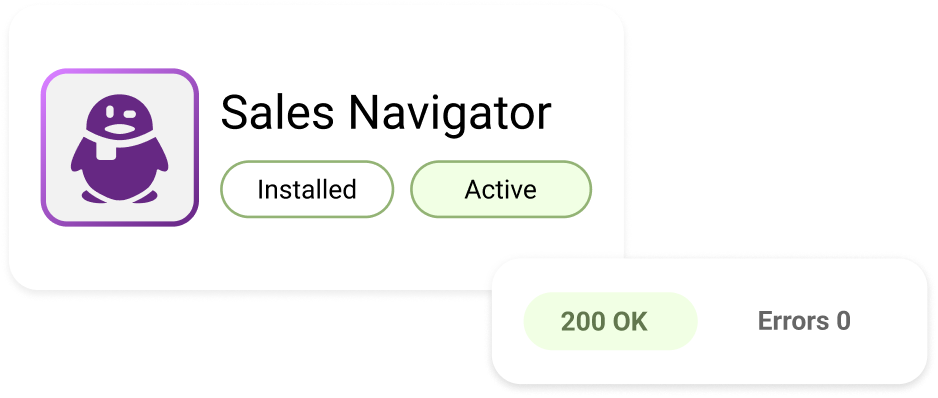
Visible status indicators reflecting application readiness
Structured management controls for ongoing oversight
A scalable lifecycle framework to support future integrations
The system translated backend logic into a predictable, user-centered flow that reduced uncertainty and improved confidence in extending site functionality.
Outcome
The structured lifecycle model enabled users to independently declare and manage integrations without requiring direct developer intervention.
By surfacing application state and reducing ambiguity, the experience improved user confidence and supported the CMS’s evolution into a more flexible platform.
The scalable interaction framework also provided engineering with a consistent foundation for supporting additional integrations over time.
Reflection
This project reinforced the importance of defining mental models before designing interfaces, particularly when introducing technically complex functionality.
I learned that extensibility is as much a UX challenge as it is a technical one. Designing for platform growth required balancing user clarity with long-term architectural considerations.
If iterating further, I would explore deeper visibility into edge-case handling and conduct additional user testing to understand where interactive elements may be enhanced to further strengthen user trust..
This experience strengthened my ability to design scalable product systems that align user needs, technical constraints, and platform evolution.